Thursday, October 21, 2021

Turn your disadvantage into an advantage

     The Kata Bassai is believed to have been created by Master Sokon"Bushi" Matsumura. kJust as in any Kata, we do not know the purpose and the application that was intended by its creator. But with bits and pieces of information gathered by such authors like Dr. Bruce Clayton; his theory about the Shotokan fighting system, Master Funakoshi himself and from our knowledge of Karate history both from digital source and oral traditions, they have provided hints on the "probable" purpose and application of the Kata. We can use these information to help us come up with our own expression and practical interpretation of the Kata. The original name of the Bassai Kata is Passai. Master Gichin Funakoshi changed the name into Bassai which is the Chinese pronunciation because it would be pronounced Batsu-Sai in Japanese. The Kanji character for Batsu means “to extract” and Sai means to “to block”.  In Bruce Clayton’s book "Shotokan's Secret: The Hidden Truth Behind Karate's Fighting Origins" he theorizes that in military strategy this could mean to extract the principal away from danger or become a blocking force preventing capture of the principal; with this theory Bassai would be similar to Tekki Kata which can be used as a strategy for body guarding or third-party defense, by defending and extracting the person of importance away from harm. 

Third-party defense, VIP protection

            Master Gichin Funakoshi used the title “To penetrate a fortress”. He opted to use the Chinese pronunciation, where in “Ba” means “to seize” or capture and Sai meaning “a place of strategic importance” or fort. He also said that in the Kata, the shifting of the blocks represent the feeling of turning the disadvantageous to advantageous and that the Kata implies the will of breaking through the enemy’s fortress. Dr. Clayton in his book interprets this teaching as penetrating through a violent crowd or mob. Being at a disadvantage facing multiple attackers, you use weakened opponents as cover or shield just as in Tekki Kata and therefore the mob becomes your tactical advantage. In a one on one fight with a formidable opponent, you must first break his will to fight not just through strong or superior technique but by gaining tactical advantage and having the stronger will or spirit. 

The military or police would conduct raids to enemy strong holds with speed and shock elements. They would breach fast, shouting loudly, employ flash bangs, smoke and fragmentation grenades. Their tactical maneuvers can turn their disadvantage into an advantage, like if they are up against a larger force or if the fight is in confined spaces (Close quarter battle). They would attack the enemy hideout hard and fast with overwhelming force. Such is the essence of Bassai. 

Raiding a stronghold is fast and with
 overwhelming force.


Turning the disadvantage to an advantage is to have the mind develop “Tactical awareness”. In self defense we must educate ourselves of the different tactics or modus of criminals so as to avoid being a victim. Counter criminal tactics and be a hard target. Know where we should sit or position ourselves so that it is safer, what are possible weapons within your surroundings, who are your connections in case you’ll need help, where do you run to when you escape (exit points), where can you hide (cover and concealment). This is the mind of Bassai.

These principles of combat in Bassai can be applied to one’s daily activities. Be creative and turn a disadvantage to an advantage, turn your weaknesses into strengths. If you make mistakes or fail, make it an opportunity to learn; use your failure to become better and stronger. If you had a bad or painful experience, heal your wounded heart and use your scars to help and to heal others. Acknowledge your weaknesses so you can focus on your strengths. Employ your will to overcome difficult tasks or challenges with the same spirit as a warrior breaking through a fortress. Seize or capture opportunities that would eventually lead to the accomplishment of your goals. In our business dealings we must have tactical awareness such that we would not be fooled or taken advantage of


       Control the pace of your activities, finish your work early if not on time and surprise them, deliver shock and awe; always make an impact. The high ground is an advantageous position. Always do your best and aim for that high position in your organization.
             Master Funakoshi says that the
             combination of blocks conveys 
        the feeling of turning the disadvantage 
        to an advantage.

Practically it will be harder for people to mess with you when you are in a high position but more importantly being in a high position means you have more responsibilities, more resources and power to help others, to do more for your community or organization, to empower your people and to serve. The high ground is not about pride but of humility and benevolence. Strive to have a strong mind and spirit that overcomes the fortress in your life.


He is our advantage.


Tuesday, August 24, 2021

NIJU KUN No.9

            “Karate takes a lifetime of practice”. This statement can be very daunting not just for our students or Beginners but for Black belts as well. Karate practice requires commitment. To continue to pursue this path is a choice that each of us has to make. Some students when they’ve reached a certain level quit because they’ve lost interest or they stopped for a time and they feel they are far behind, comparing themselves to their peers who have advanced both in rank and in skill, thinking they could never catch up; so they quit. Those of us who made it to Black belt Sho Dan rank had to renew 

Practice to become the best athlete 
that you can be.
  that commitment to the path of Karate-do. Earning a Black belt signifies another beginning where one starts to truly learn what Karate-do is all about.     But life catches up with our passion. Got married, started a family, busy with     studies, busy with career. Priorities change, time for Karate and our     organization had been cut down and for some; there seem to be no time at all.   There are some Black belts who lost interest in the art of Karate and found   another passion. Should they decide or find their chance to go back to training,   the JKS-KDA doors are wide open; let them know that we are more than glad   to welcome them home. For those who leave because they lost interest in   Karate and found other passion, we wish them luck on their new path and we are happy to know that their knowledge of Karate will greatly help their lives; also we are glad that they have been a part of our journey as well.

           Those whose passion for Karate still boils like hot water, who choose to continue on the path and those who go even farther and choose to be a teacher of Karate-do, you must remain faithful. Our daily lives challenge our commitment and it is even more challenged during this time of Pandemic.
Master Tetsuhiko Asai is
 one of the greatest Martial
Artist of our time.


 To overcome your challenges you have to stay motivated to practice. We must make the time to practice on our own and to practice with our Karate family. Practicing with our family by attending Dojo practice or Black belt practice enables us to learn from our chief instructor David Lay Sensei and from each other. It also fosters our camaraderie. During this Pandemic we have to adapt. On line classes and Black belt practice is the best that we can do at this time. I myself could not practice as often as when I was still single, I am not as active in our organization unlike before I started a family. I do understand how hard it is to maintain commitment to Karate as a way of life. Can I share with you how I stay motivated to practice? When I was young, competing in Sport Karate motivated me. I wanted to excel as an athlete; now Karate as a Martial art motivates me to practice. Just like other masters of the arts like Levi  Celerio of music or Fernando Amorsolo of  painting, I want to be an excellent artist through Karate-do. Second motivation is self-defense. I want to keep my mind and body always ready to defend myself and the people around me. Third motivation is I want to  be healthy and physically fit to face daily
The journey is personal but its great to have
people travel along with you.

challenges and to have longevity. And there is not a better time to be healthier both 
mentally and physically than in this time of Pandemic. Fourth motivation is being a teacher. Teaching students entails a greater responsibility. I know I can teach     Karate but I have to keep attending Black belt practice because I   have to keep up with technical updates and for my lessons to be aligned   to our system; also to develop both my teaching and Karate skills   further. Lastly I’m always excited to practice because of the fellowship.   I want to constantly build my relationship with you guys. You are   family. The more we grow our relationship the better we can appreciate one another. We will be more understanding of our differences, we can appreciate each other's negative traits as well as the positive. Our friendship entails mutual trust and respect. 

                For our Karate family members to continue to have a place to come  home to, to continue supporting those who embark on this long journey and to promote this wonderful martial art are my motivation to share time and talent to Dojo service. I hope these can help whenever you face challenges to practicing Karate-do. Do not let it turn cold.
Deeper relationships promote harmony


As One for His Glory.

Saturday, July 3, 2021

“It’s not a Gym it’s a DOJO”

Shomen also known as Kamiza
      Every Karateka would know that the word Dojo means “a place to learn the Way”. However, There are many who do not know the different parts of the Dojo, except for the Shomen or the front wall of the Dojo, which is often a part of the formal bowing done at the start and at the end of training. In order to fully grasp the attitude, the discipline and the conduct by which to train in “budo” or martial arts like Karate, it is important to know the different parts of the Dojo for it can help those who enter in their quest to truly learn budo, or in our case Karate-do.       
    The Kamiza, more commonly known as Shomen meaning “upper side” is the Dojo’s front wall where the Shinto shrine; sometimes an offertory altar or simply a picture of the style’s founder is placed. It does not matter what religion one has because the Kamiza simply guides students  and serves as inspiration to pursue not just physical goals but spiritual goals as well. The Kamiza should give the Dojo that spiritual atmosphere. Such is why a true Dojo is temple inspired; It is a place to cultivate virtues like respect, humility, patience, perseverance, self control, fortitude and compassion. 

          The Shimoza is the “lower area” where the entrance is located. Associated on this side are intellect and human interaction. Humility, discipline and awareness are associated on this side. At the entrance students enter with the desire to learn. As they enter, students must leave behind their preconceived ideas about what the training will be, about their own strengths and weaknesses or expectations. One must have a clear and open mind to learn the art of Karate-do or any martial art (Budo). The student should also leave behind whatever problems or distractions he may have like problems at work or school, over excitement with someone or something.To just be in the moment, so that he or she may have focus and concentration in training. At the entrance the students bow before they
Parts of the Dojo

enter the training area not just to honor the place of learning but to enter it with humility and leave the ego behind. Once inside, the students must develop trust with one another and because of humility they should be able to train safely and be sensitive to fellow students. Discipline is initiated at the Shimoza. They learn to conduct themselves with dignity by following the principles of etiquette. The discipline and proper mental attitude must continue even when one exits the Shimoza door. 

          The Joseki means “upper lateral” and it is the senior members’ side which is at the right side of the Dojo. The values like virtue and charity are associated in this side. There should be a sense of commitment for the senior members to lead and be responsible in helping the junior members learn. They are obligated to be good examples to the juniors. The seniors’ side must have a high level of intensity during practice. At the Joseki, the juniors are able to observe and emulate the seniors. The Shimoseki is at the left side of the Dojo and it is the side of junior members. This side is characterized by integrity or rectitude because the junior members are expected to always give their best. From this side, the juniors can observe the seniors and learn from them; also to see if the seniors have the integrity to give their best too. 

           The center of the Dojo is where all the members of different levels meet. This center space is known as “Embujo”. Em means “to act”, bu means “martial” and jo means “place”. At this space everyone is expected to train hard and always do their best. The essence of the center of the dojo is the attitude of being in a life or death situation wherein there are no second chances; no next time. One has to seize the moment and bring out only one’s best. Specially on an ordinary day like when you attend the usual Saturday practice. You were off and you felt you have not been able to do very well. You're thinking that you will just make it up next Saturday training. Yes there will be many more Saturdays to come but that Saturday, that day itself is done and gone forever. The Embujo is a place to do martial training. Actions are the only thing that matter and not talking or theorizing. At the Embujo there should be no excuses, no complaining and whining. 

    Knowing the values represented in each part of the Dojo are vital not just to aid the Karateka to develop his technique but to improve his character as well. The discipline and the attitude that we acquire in the Dojo which help us to learn and hone our skills should also be applied once we step out of the Dojo. Human interaction requires correct etiquette, virtues of humility and compassion initiated at the Shimoza. Be inspired and get motivated by the Kamiza to seek spiritual growth, to perfect one’s character through everyday life. Be observant and emulate those who succeed and always bring out the best in one’s self just like being in the Shimoseki. Be able to always do your best, to have integrity, lead by example and empower others as if being at the Joseki. Avoid making excuses for one’s short comings or failures and just do what is needed to be done, accept responsibility and be accountable. Live as if there will be no tomorrow. This does not mean to indulge in an irresponsible, hedonistic and care free living. We must seize the moment.  At the Embujo it is life or death; there are no second chances. Be grateful and happy; we must grab the opportunities that bring us closer to our goals, be the best that we can be, to be great at what we do; to live one’s life to the fullest and have no regrets. Such is the attitude learned at the Embujo. By understanding what each part of the Dojo represents, we can practice Karate outside the Dojo.

Source: “In The Dojo” by Dave Lowry


The World is our Dojo.


Thursday, January 14, 2021

The Way of Empty hands vs. Knife

      Back when I was a brown belter we had knife defense as part of our curriculum. I've also read books  and I have seen a lot of demonstrations showing techniques for knife defense. For defense in a fist fight we learn what techniques and strategies will work because we either experienced a real fight or simulate it through Kumite, with real fight intensity even as we keep our training safe. Although there maybe some Martial artists out there who have experienced a real knife attack and survived, I am sure that a lot of Karatekas like me have not experienced it; thank God. I had no idea how a real knife attack should be. I have seen a lot of fist fights growing up in all boys schools and walking the streets of ghetto Manila. But I have not seen an actual stabbing (Thank God again). Most of us have come up with knife defense techniques and strategies based on assumptions. Most knife defense skills being taught or demonstrated will get students or participants killed rather than increase their chances of surviving the attack. This is because we tried to deal with the threat of knife attack without truly learning or understanding it. While I greatly appreciate knife defense techniques that look good in demonstrations, defending against a real knife attack is messy but effective. Today there are lots of materials in the internet to help us learn. There are a lot of videos/vlogs about the realities or as they say “the truth about knife attack”. We can also see real knife attacks caught on cameras. I took some lessons in Kali to help my research in understanding the blade. Learn from the experts of knife fighting and adapt what you learned into your Karate. Okinawan karate always had the study of weapons known as “Kobudo”. Arnis systems start from weapons and progress to empty hands. Our Karate is empty hands and could progress to weapons/ Kobudo. We can apply our Karate in wielding a knife, carrying a gun or blunt objects. While empty hand defense is indeed a disadvantage against any weapon, it is still prudent to develop the skills for it. Here in the Philippines it is expensive and complicated to carry a gun unlike in the U.S. where they have a right to bear arms and civilians can easily buy and carry around pistols to automatic rifles depending on state laws. And if you are a law abiding citizen be advised that it is against the law to carry knives and blunt objects (Batas Pambansa bilang 6). Thus we should be able to rely on our

The characteristics of a
real knife attack

Empty Hands. I do not want to offend anyone but we should all be open minded and reconsider what we learn and teach, because unlike a fist fight, dealing with a knife is truly more fatal. The goal is to survive the attack, to come out of it alive and if you are truly good or lucky, maybe you escape without a scratch. If you have seen videos of real knife attacks, the energy of the attacks are very intense and violent, so it is better to accept that you might get cut as you fend off the attack. A knife attack is like a sewing machine because of continuous stabbing and slashing not just a single but with multiple stabs and slashes. The attacker will not leave his weapon arm hanging out for us to grab. The attacker does not wave the knife in front of the victim, he wants a surprise attack. He uses his empty hand to grab you and the attack is usually from close range. These are the things to consider when you are developing your techniques.      

Block and Counter strike
at the same time

     In order to prevent the "sewing machine"  or the continuous stabbing and slashing, block and counter strike at the same time or immediately after you block and check the weapon arm. Continue to attack vital areas until there is a chance to escape. If you are unable to escape, keep the weapon arm in check at all times. Your hand or arm should stick to it like glue. If you are able to grab the fist that holds the knife you can "return the blade" meaning you redirect the blade to cut or stab the attacker as he tries to free or pull back his weapon arm. Apply arm or wrist locks and take downs to control the attacker but you should only do this if you are bound by duty (for police or security) or if its truly necessary, otherwise just escape. Do not attempt to disarm; only if it is 

really necessary and that there is a clear opportunity to do so.
Keep the weapon arm in check

In Kumite we hone our techniques by doing drills then we pressure test it through real fight intensity (free style) sparring. Our knife defense should undergo the same process. Drill the techniques then practice with real life intensity and with training knives that will hurt like a punch when you get hit so that there is at least a threat of getting a bruise if the defense failed. Just like in Jiyu kumite, we put parameters to keep the real life attack scenario as safe as possible and preferably wear protective gears like head gear and an armor for the attacker; an eye protector for the defender. There are always a lot of "what ifs" meaning there a lot of variables and possibilities in Kumite or in any fighting. You just have to understand the principles and learn to adapt to your opponent or the situation. This is also true in knife defense. There are a lot of ways the knife attacker can react to your defenses so when he moves, you move. Protect your vital areas while you attack his. Be aware of what you can use in your surroundings as a weapon, preferably something that can provide good distance from the attacker like a long stick or a chair. Put something between you and the attacker like going around a car or a table. I was asked by a participant in a seminar why I kept kicking the attacker in the groin several times before going for the escape because like him we are nice and good people. We do not want to be violent but we have to in this case. A knife attack is very personal and very violent. The attacker can be psychotic, high on drugs or full of rage and adrenaline. and to be able to escape you must be able to give the necessary force. We certainly would never want anything like this to happen to us but as Martial artists it is always better to be prepared for this type of situation. 
Real Life Intensity Practice


Peace be with You.


Tuesday, December 1, 2020

Using Nagashi Uke and Maai


          The principles of Karate-do teach us to be Non-violent. We practice to be able to control our negative emotions like anger or fear, to swallow our pride, to respect other people and to be patient. All such virtues are to enable us to avoid conflicts. Karate is for self defense only and fighting should always be the last resort. The principles “Kata always begins with a block” and “In Karate never attack first”, does not mean that we should not strike first because there would be instances where we would need to strike first tactically. What they mean is that we should have the mentality of not being the aggressor, to have the attitude of avoiding conflicts and preferring peaceful solutions. In our daily life it is very rare that we encounter physical attacks, what we encounter more often are verbal attacks. There might be a harsh person in your life. He or she would always shout at you, curse you, offend or humiliate you and make your life difficult. Hopefully you have not punched the guy yet. Getting back at them, retaliate in every way, go to bed angry or sad is what we usually do. But what is the extra ordinary thing to do?

          If there is a harsh person or bully in your life, he can be your class mate, group mate, your Boss, a random angry guy, or a co-worker who taunts you or throws his verbal attacks at you, just deflect his attack. Let the attack pass through you and use his energy to counter. There was a story about a Karate master who went to an inn and he was met by a very angry guy who was jealous of him. The guy punched the Karate master and the Karate master deflected the punch, grasped the attackers hand and dragged him to a table and invited the guy to have a drink with him. The guy actually tried to physically harm the Karate master; but the attitude of the Karate master serves as a good example specially for verbal conflicts. There was also someone I knew who was very patient and when he heard that his older friend whom he calls Manong was bad mouthing him, he just told us not to mind Manong because he has a health problem and that he is already old. He was sincerely patient and understanding of Manong.

          So the first thing about deflecting a verbal attack is to check your pride and be humble. If the harsh person is shouting and cursing at you, you look at him or her and imagine that he/she is like a small toddler shouting and throwing tantrums because that is exactly how they are behaving. This way you will not be hurt because what you see is that your aggressor has the mind of a small child and that he must be dealing with far deeper issues in his life. If you have inner peace you will not

Having deflected the attack,
 you can choose your 
counter

let yourself be affected by their negative and aggressive actions. You just let the words and the deeds go past you, and just like the Karate master you redirect and counter positively. “Sticks and stones may hurt your bones but words should never hurt you”. You deflect and let it go past you, just let it slide through. You counter not by being aggressive but by being assertive and let them know that you don’t like how he or they treat you. You counter disrespect with respect, respond to cruelty with kindness. You cannot deflect effectively and respond positively if you have fear and insecurity instead of confidence and courage. How can we have courage and confidence? Keep practicing Karate. Developing your knowledge and skills turns fear into confidence. Developing our character through practice of Karate-do turns pride or insecurities into humility and compassion. In Budo, there is no room for fear or anger because it will hinder your correct action. In our life, fear and hatred shackles our mind and spirit. We are unable to move on and unable to do the right thing. We would do or say things that we will regret. 

    In Kumite or sparring we can disengage from our opponent to a safe distance from his attack while we recover, relax and calm ourselves. We rethink our tactics or change our rhythm. 

We can also distance ourselves from that harsh person
"You control the distance, you win the fight"

and de-stress, calm ourselves and make sure that we don’t tie ourselves down with fear or anger. Distancing ourselves from the negative person will allow us to choose better ways to react or handle the situation and a chance to recover from the hurt and get stronger. However, when we increase distance from our opponent in sparring we may be safe from attack but we also miss opportunities to attack. If we allow ourselves to stay distant, 
our mind and emotion may be safe from the negative person  but then we will also miss the opportunity to become a better person. We will not have the compassion for that person. Be in control of how you engage or disengage mentally and emotionally because staying distant is either being afraid or prideful. 

          I have not yet mastered this techniques of deflecting the attack and controlling the distance. There are still instances where I would blow a fuse and say or do things that I would later regret; there are times I am unable to take a step back and breathe to be able to think more clearly and calmly before I react or speak. The process of forgiveness for me is still way too hard that it is easier to just be distant and angry. Let’s keep practicing this techniques in our daily life until they become our natural response to verbal conflicts. Keep practicing Karate-do to improve our character. Practice makes perfect.


Love your enemy.

Thursday, June 25, 2020

Sport or Traditional Karate


               This has been the debate of many modern martial artists. I have heard every single argument and everyone’s opinion is valid and true. Sports do develop values and discipline and so does Martial arts; Combat sports help propagate the Martial arts. The old masters however, were wise and have foreseen that if we turned martial arts like Karate-Do into sport, we would lose its essence. 

    Many have resolved to have the best of both worlds and I think in this era, it is how it should be. I realized that there are three aspects of Martial arts; Karate in particular. The Self-defense (Combative) aspect and the Character development (Spiritual) aspect which are both associated to “Traditional Karate” and the Sport aspect. Can I share someone’s experiences while learning Karate-do? I’ll hide him under the name Wally Gozum. 

     I was a Karate student doing Dojo training, a balance of Sport and Traditional Karate under my teacher David Lay Sensei. When I became a Sho Dan  I was selected to be part of the athletes training pool. I trained in Sport Karate for many years, participating in Inter-clubs, Regionals, Nationals and International competitions. As an athlete I became very competitive; I loved winning and I hated to lose so I trained and worked very hard. But I was also learning about the principles of Karate-Do, which were all about letting go of pride or ego. What was it going to be? “Winning is the only thing” or “Do not think you have to win”? So I thought to apply the principles of Karate-Do to my Sports training. Back then it was easier because Sport training was not much different from Dojo training. We still followed strict dojo etiquettes in our sport training, we trained in our Gi most of the time, cleaned the dojo after practice (Soji). I was always assigned to clean the glass windows and mirrors. We did Mokuso (meditation) before and after our sport training. Things we do in Dojo practice open our
Meditation helps in easing emotional and mental
strains of training and competitions, Increases 
awareness.

 minds to grasp the path of Karate-do and allow us to stay grounded. Back then the local tournaments were truly an extension of the Dojo. The participants were all lined up sitting beside the Tatami (Mat). Respect or humility was emphasized by repeated bowing, but now it is less. Even if we lost we stayed and waited patiently beside the mat area so that after the event all players, winners; losers and the officials will bow together. Today it is not impossible to merge Karate Sport and Karate-Do. I’m not saying bring back the old ways but maybe we can make new ways to keep  our sport aligned with Karate-Do. The competitive atmosphere was there; performance evaluations, politics will always be there. Amidst all those noises we can still manage to marry the principles of the sport and way of Karate. By applying the “Way” we can become or make better athletes and sport officials.

          A year after I retired from competing I had my first and only self-defense experience. It was a road rage. A plus 80 Kg guy knocked down my friend and I had to engage; I was a minus 55 Kg. On that very stressful; very intense situation my training had kicked in, tournament skills like Kizami, gyaku tsukis, mawashi geri; I was hurting him but he quickly recovers, I was not even knocking the wind out of him. No I was not controlling my techniques. I was putting everything I got into every blow. I was naturally and accurately landing my techniques on WKF legal targets. My friend and I could not escape and the defense turned into a fight. The Big guy tired and sore just gave up and that was the only time we escaped. You must realize that self-defense is not about winning a fight it is about escaping or surviving that dangerous situation very swiftly. I realized that I needed to fill the gaps in my training; so I studied Hung Fut Kungfu under Master Alex Zamora and I trained in
Kakie or Push Hands is an exercise
for Intuitiveness; for Proprioception 
(awareness of space and self-movement)

Combative Karate under Sempai Hubert Posadas. I also learned from different Martial artists whom I crossed paths in my journey. I saw that our combative exercises also helped in my timing and improved my awareness of my opponent during point sparring or Kumite. I do believe that Kumite (Sport) allows one to learn all the dynamics of fighting in the safest way possible. 
Later on I organized a small group to practice with and further develop our Self-defense program. As I trained to respond to violence my mind was becoming violent, I felt a lot of aggressive energy. I noticed that my ego was getting bigger. I was becoming hot headed. So again I resolved to bring back the “Way” (Do) in my group’s self-defense training to be able to refrain from violent behavior. When we did our drills, responding to violent stimuli our minds remained clear and calm.      
                                                                                                                                                            As per my experience, I realized that a Sport Karate athlete has excellent agility and speed, timing and accuracy, stamina and endurance that put him into great advantage for self-defense but he
Hojo Undo
(Karate strength and Conditioning)
has very limited technique and tactical training, not for consensual   fighting but for self-defense. Sport training gives non-athletes great physical   conditioning. The Combative Karate practitioner has the vast techniques as   well as the intuitiveness to survive dangerous situations and can apply that   intuitiveness  when he performs Kata or fights in Kumite competitions. The   “Do” or the spiritual aspect keeps the Ego in check and makes sure that we   do not stray from the path of perfecting our character. However; there are   those who gain knowledge of the philosophies of Karate-Do but do not take the opportunity to gain deeper understanding by engaging in combat. Martial arts (Budo) came from either military arts like swordsmanship or fighting arts like Karate. As ancient warriors sought a way out of their entanglement in conflict, Budo became 
Functional/Sport specific Conditioning
an instrument of peace. But the enlightenment of great warriors was not realized without their experiences in the battle field or in real fights. I’m not saying that we should go to war zones or pick fights in the streets, but we should go out of our comfort zones and join tournaments because by participating we can at least experience combat but in a very controlled environment. In other countries elder Karatekas still compete as long as they are able. We can also do some drills for the more dangerous Karate techniques. We can practice real life self-defense scenarios. In Dojo training always have the mind-set “to kill with one blow” or ikken Hissatsu. This mind set will put us in combat or in life or death situation whenever we practice. By experiencing combat we experience the principles of Budo/Karate-Do.

I believe it is better if we did not have to balance “Traditional” and Sport training or to choose to specialize in one aspect. But instead we unify them and create a holistic approach to training because each aspect of Karate will greatly benefit the modern Karateka, especially our athletes.
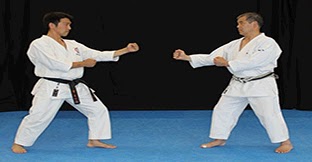
Jodan Tsuki
Jodan Teisho uchi


Be the Lord's Warrior.

Tuesday, May 26, 2020

KARATEKA TRAITS FOR SUCCESS


Every time I would ask a new student or his parent why they chose to enroll in Karate, the answers are almost always self-defense and discipline.

Those were also my reasons when I was a Beginner. By the time I was in Intermediate level I was starting to understand the principles of Karate-do. Through years of training these principles are to aid in developing our character along with techniques and skills. Training enables us to live and experience these principles in the Dojo which results in deeper and better understanding. Years of Karate-do training instills in us character traits such as Humility. By being humble means we respect others; we have compassion; we are able to keep an open mind and keep learning new things, even from our failures and mistakes. As we persevere in training; we are motivated to improve our technique and to accomplish the goal that we set for ourselves. So we give our very best inside the Dojo; we learn to Endeavour, we develop an excellent work ethic. Master Gichin Funakoshi said that a person who has truly learned Karate can overcome difficulties or challenges.
Those who train and participate in Jiyu Kumite or free style sparring and fight hard each time should be able to develop a High tolerance for risks. In free style sparring, you see an opportunity and once you attack you are vulnerable and in risk of getting hit; when you create an opportunity and posture to defend, there is a big chance you get hit first. It’s not just about the points, because even if Kumite is a very controlled environment, you know that there is still a good chance of you getting hurt. It is in the rhythm of fighting that we are able to take calculated risks.  Also, in combat, be it in sparring or self-defense there is no room for hesitation because the essence of combat is life and death. Training in Karate develops Decisiveness.
There is a saying “move when your opponent moves”. Karate training enhances our awareness. Our awareness will enable us to adapt to our opponent or to the situation. Thus a Karateka is Flexible. Also our heightened awareness will open our minds to be Creative. Karate is an art and just as any other art it is a form of expression. However, most Karatekas could only be creative and fully express themselves in free style sparring; within the limits of the rules. We have to realize that Karate is very strict and rigid because it is necessary in building strong foundations. However, we can see the progression from Kihon and Kata to Kumite wherein the strict and rigid becomes loose and flowing; so the Form becomes formless. I have observed Kata players from one of the country’s biggest Karate organization and each player from age group to the seniors performs almost exactly the same. You can hardly tell any difference. Same timing, same accents and even the bad habits are the same. Learn the standard way of performing the Kata; follow your Sensei’s instructions because that will be your basis and foundation. After gaining knowledge and insights you can perform the Kata in your own way. Just as two singers singing the same song but each gave their own rendition. During Kyu and Dan exams we have to do the standards but during tournaments or when asked to perform in demonstrations you can do your own rendition of the Kata. You can also express your creativity by making your own Bunkai. Senseis are very creative in keeping the class always exciting and interesting. Those who have reached a high level of expertise can make their own Kata. Yes that’s what I said; I know it sounds crazy but as a Martial artist we should be capable of creating our own Kata. I haven’t made one just yet but I am
planning to. It does not matter if it will become popular, it’s yours and I will be honored if someone
will teach or share his own original Kata to me, just like musicians jamming and learning another’s original composition. These traits developed through Karate are the same as those who have Entrepreneurial Spirit; and just as a Karateka, Entrepreneurs honed their traits and skills.

With God you have the advantage.